Caution during periods of complacency
Stock markets shake off trade tariffs
Around five months ago, the US president’s announcement that he would impose high import tariffs triggered a shock reaction on the stock markets. After just one month, global stock markets had fully recovered and have been climbing from record to record ever since, undeterred by the fact that the effective US import tariff rate remains at around 17%, the highest level since 1935. So is that the end of the matter?
Creeping brake effect
Import tariffs act like a consumption tax: they make products more expensive and slow down demand. However, their effect is only felt after a delay, as importers initially sell their stock at the old prices or exporters temporarily bear the tariffs themselves. According to the independent Yale Budget Lab, this is currently weighing on US GDP by −0.5% and is likely to rise to −1.0% by mid-2026. If they remain in place permanently, the tariffs would reduce growth by around 0.4% per year.
Skid marks on the job market
If tariffs remain at their current level (which seems likely at present), US economic growth is likely to weaken further in the coming months. Around 480,000 jobs could also be lost by the end of 2026. This trend is confirmed by the latest labor market data.
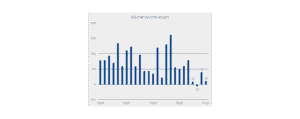
To counteract this development, the US Federal Reserve is expected to further lower its key interest rates at its upcoming meetings. However, this monetary policy normalization will only provide relief for the economy after a certain delay.
Diverging growth prospects
The growth outlook in the other two major economic regions is significantly more favorable. On the one hand, the effect of US tariffs on global GDP (excluding the US) is likely to be only around −0.1%. On the other hand, interest rate cuts and additional fiscal policy stimuli are already providing tailwinds for consumption and investment.
Overall, it can therefore be assumed that the growth differential will shift in favor of the rest of the world and to the detriment of the US.

In light of this divergence, combined with initial warning signs of overly optimistic market sentiment and high valuations, we are realizing partial gains on US technology stocks in isolated cases.
Publisher: Tareno AG, Gartenstrasse 56, 4052 Basel, Switzerland, Tel. +41 61 282 28 00, info@tareno.ch, www.tareno.ch. We welcome feedback on our publication. The content herein is for informational purposes only. The publication does not contain any legal or investment advice or investment recommendations, nor does it constitute an offer or solicitation to make an investment.
Images/graphics: The graphics were created by Tareno AG from public market data.

Do you have any questions about this topic?
Our portfolio management team is available to provide explanations and clarifications.
Learn more about us
Asset management
Publications