Current Outlook Following a Historic Tech Sell-Off
AI Stocks Under Pressure, Nervousness Rises
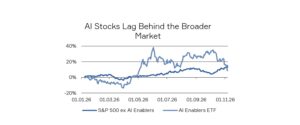
Selling pressure continues on Asian and European stock markets this Friday. The sharp rise in nervousness is also reflected in the sharp spike in the volatility index.
What’s Behind the Sell-Off?
Doubts about the AI investment boom had already weighed on tech stocks in recent weeks. Rising financing costs, questions about the profitability of the massive investments, and bottlenecks in the construction of new data centers fueled concerns that the pace of expansion could slow down.
With the Democrats’ surprisingly decisive victory in the U.S. midterm elections, another source of uncertainty has emerged: stricter regulatory requirements for the expansion of AI infrastructure.
The surprising change in Texas’s governor is particularly significant. The state accounts for about 25% of the planned U.S. data center capacity. The Democratic governor-elect has announced a moratorium on approvals for new data centers. This increases the risk of delays and higher costs for further expansion.
However, the severity of the market reaction cannot be explained solely by these fundamental risks. Many investors were caught off guard. The Bank of America fund manager survey from October had already shown that semiconductor stocks were among the most heavily overweight positions, in some cases with high leverage.
In such cases, a correction can trigger panic selling and forced liquidations. Reports of significant position reductions by hedge funds support this assumption. Since many investors are already heavily invested in technology and are seeking diversification, there also appears to be a lack of buyers at the moment.
Better to be proactive than reactive
Our investment philosophy is based on identifying and capitalizing on long-term trends early on, while at the same time maintaining robust and diversified portfolios and acting countercyclically when euphoria runs high.
Accordingly, we have been steadily taking profits in the technology sector over the past few months. At the end of April, we reduced our position in ABB; in May, we sold Qualcomm and reduced our position in Alphabet. In early July, we also reduced our exposure to the cybersecurity ETF.
We invested a portion of the freed-up capital in sectors that are less in demand but, in our view, attractively valued—particularly the healthcare sector.
Our tactical investment module, Hawk-Eye, was also prepared for this environment. Thanks to a high liquidity ratio maintained over several weeks and the decision to avoid semiconductor stocks, we were largely able to avoid the sell-off in technology stocks.
What should we do now?
Following the recent price declines, we are once again seeing increasing opportunities in the technology sector from a medium-term perspective. Our positive assessment of the AI trend has changed little. The expansion of AI infrastructure is likely to span many years. Numerous projects are already planned or underway. At the same time, the demand for computing power is growing rapidly due to more powerful models and new areas of application.
Furthermore, a slowdown in the pace of expansion would not be entirely negative. It could reduce the risk of overinvestment and free up capital for other sectors of the economy.
Since the beginning of the AI boom, phases of euphoria and disillusionment have alternated regularly. In this context, it has proven wise to take profits when optimism runs high and to make selective purchases when skepticism is rife.
We therefore view the recent sell-off primarily as a correction of what had previously been a very one-sided market positioning, rather than as the end of the structural AI growth trend. Accordingly, we are increasingly returning to the buy side.
Nevertheless, recognizing the uncertainty of our assessment, we recommend proceeding cautiously and maintaining a broadly diversified equity allocation. Even after the correction, many stock indices still exhibit significant concentration risks in technology-related companies, which we deliberately limit in our portfolios.
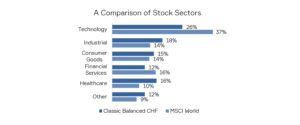
The recent sell-off in the tech sector reaffirms our approach once again: to take advantage of opportunities in a countercyclical manner, take profits in a disciplined way, and broadly diversify risk across sectors, investment themes, and asset classes in order to be prepared for various market scenarios.
Contact: Simon Lutz, Chief Investment Officer, s.lutz@tareno.ch
Publisher: Tareno AG, Gartenstrasse 56, 4052 Basel, Tel. +41 61 282 28 00, info@tareno.ch, www.tareno.ch. We welcome feedback on our publication. The content herein is provided for informational purposes only. This publication does not contain legal or investment advice or investment recommendations, nor does it constitute an offer or a solicitation to make an investment. Images / Charts: The charts were prepared by Tareno AG using publicly available market data.

Do you have any questions on this topic?
Our portfolio management team will be happy to provide you with explanations and clarifications.
Find out more about us
Asset management
Publications