Detergent Instead of Chips: How Tareno Hawk-Eye Identifies New Opportunities
When Low Expectations Meet Growing Strength
The Hawk-Eye approach specifically targets market segments where investor sentiment is particularly one-sided. Strongly negative sentiment can create an interesting starting point: When many investors are already positioned pessimistically, positive developments can trigger surprisingly strong price reactions.
However, pessimism alone is not yet a buy signal for our models. The key factor is whether sentiment is reflected in the stock’s price action. Only when a stock exhibits a constructive price pattern and increasing relative strength does a potential trend reversal become of interest to Hawk-Eye.
This very dynamic was evident at Procter & Gamble in October. While consumer staples had long been overshadowed by major growth themes, the stock began to show the first signs of change.
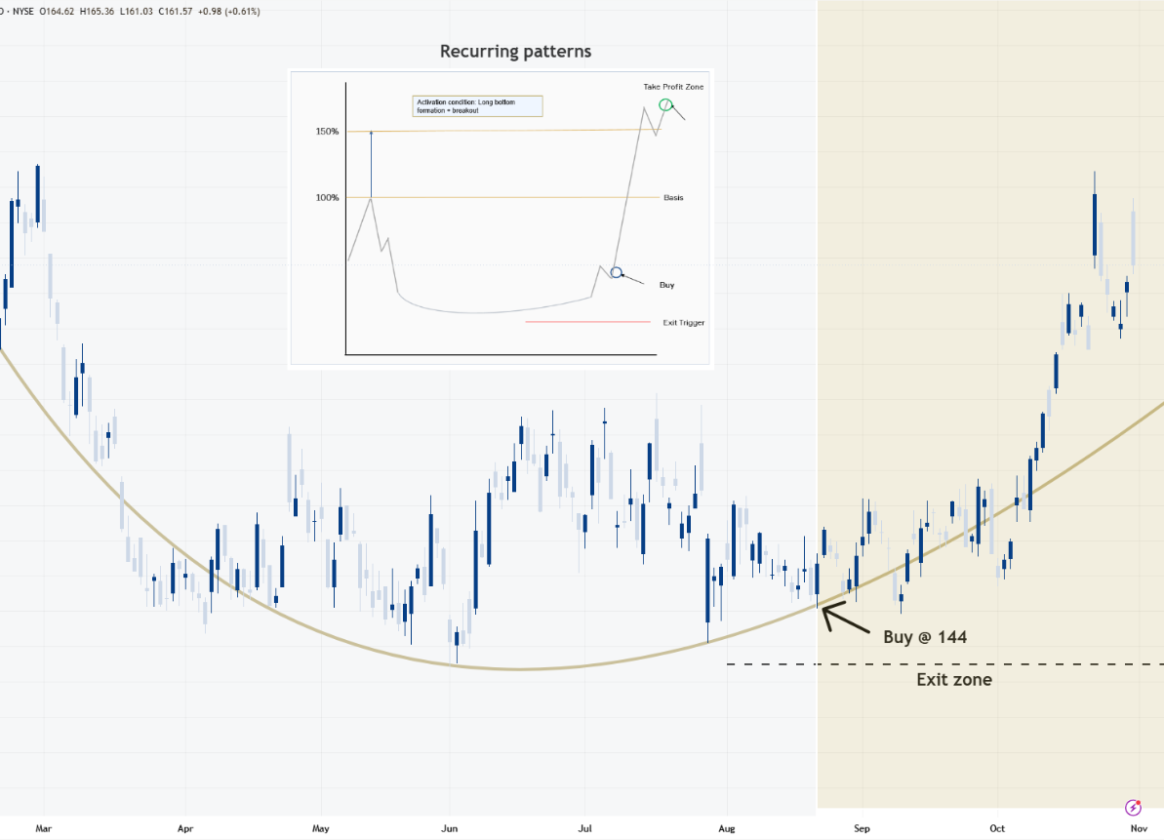
Procter & Gamble: From Negative Sentiment to a Buy Signal
The example of Procter & Gamble illustrates the interplay of the three key steps in the Hawk-Eye investment process: Negative sentiment creates the potential for a surprise, the price pattern provides the signal, and the market reaction confirms the change.
1. Identifying Negative Sentiment
Various sentiment indicators, including the BofA Fund Manager Survey, showed a historically high underweight position in the consumer staples sector. Such extreme readings may indicate an increased potential for surprises.
2. Waiting for a clear price pattern
Despite the negative market environment, Procter & Gamble developed an increasingly positive price pattern. Combined with rising relative strength, this pointed to a possible trend reversal and provided a positive signal to our models.
3. Confirmation through the market reaction
Positive corporate news was increasingly rewarded by the market. For Hawk-Eye, it is not only the content of a news item that matters, but also how the stock price reacts to it. The positive market reaction confirmed the signal that had been identified earlier.
Defensive positioning without sacrificing performance
The increasing strength of defensive sectors was also reflected in the performance of the Hawk-Eye portfolio. Our models had previously signaled a decline in market breadth and increasing divergences. As a result, we reduced market risk and strategically reallocated assets to more defensive sectors such as consumer staples, healthcare, and utilities.
In October, this positioning paid off: While the market-capitalization-weighted global equity index fell 1.6%, the Tareno Hawk-Eye certificate posted a gain of 1.5%.
Procter & Gamble is a prime example of this approach. After all, interesting investment opportunities don’t just arise where big growth stories dominate the headlines. It’s often worth taking a second look at those market segments where expectations are low, but prices are already signaling a different trend.
Subscribe to the Monthly Fact Sheet
Sign up for our newsletter and receive the latest fact sheet on the Tareno Hawk-Eye Certificate directly by email every month. You’ll also receive the portfolio manager’s analysis and market commentary on the strategy’s performance.
Hawk-Eye Certificate
Find out more about our Hawk-Eye certificate.
Tareno Funds
Discover more funds from Tareno.
Disclaimer
This document has been prepared for marketing and informational purposes and does not constitute an offer or a solicitation to subscribe to, buy, or sell shares of this investment fund. It does not constitute investment advice. Only the current fund documents (in particular, the prospectus and KID) are exclusively authoritative. Past performance is not a reliable indicator of future results.
Images: Marijke Vosmeer, Luzia Hunziker, Jürg Kaufmann, Istock, Unsplash / Graphics: Tareno AG / Bloomberg