Global water bankruptcy: A structural diagnosis with clear investment implications
The Global Water Bankruptcy Report published by the United Nations University Institute for Water, Environment and Health (UNU-INWEH) at the end of January already uses a new and unusually drastic term in its title: “Water Bankruptcy”.
We are not talking about a temporary water shortage, but the structural loss of the regenerative capacity of entire water systems. More and more river catchment areas and aquifers are losing the ability to return to their historical normal state. Aquifers are underground layers of rock or sediment that store water and serve as central natural drinking water reserves for the population, agriculture and industry. What used to appear as a cyclical drought is becoming a permanent situation in many regions.
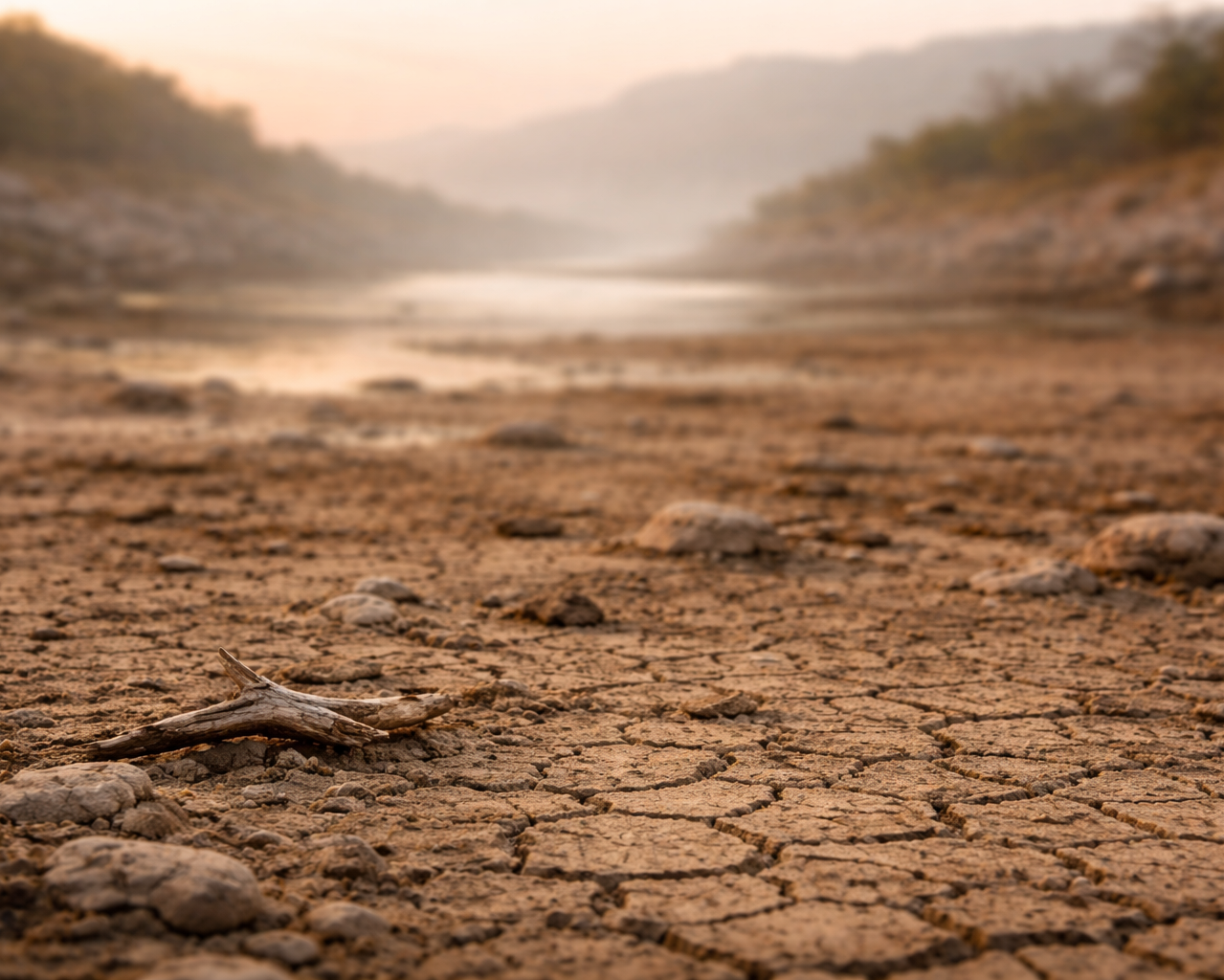
When not only your income but also your savings are exhausted
The report works with a simple but apt picture: societies have not only overdrawn their annual “water income” – precipitation, rivers, snowpacks – but have been drawing on their long-term “savings” for decades: aquifers, glaciers, wetlands, soils.
The consequences are measurable:
- Groundwater is being extracted faster than it can regenerate
- Wetlands are disappearing on a historically unprecedented scale
- River catchment areas lose their ecological stability
- Soils become saline and delta regions sink, resulting in the loss of agricultural land and settlement areas
The current report therefore calls for a paradigm shift: away from reactive crisis management and towards structural “bankruptcy management”, i.e. restructuring at system level.
The core problem is not a lack of water
Many discussions start with a fundamental misunderstanding. The earth physically has sufficient water. The available water has always been there and is in a closed cycle.
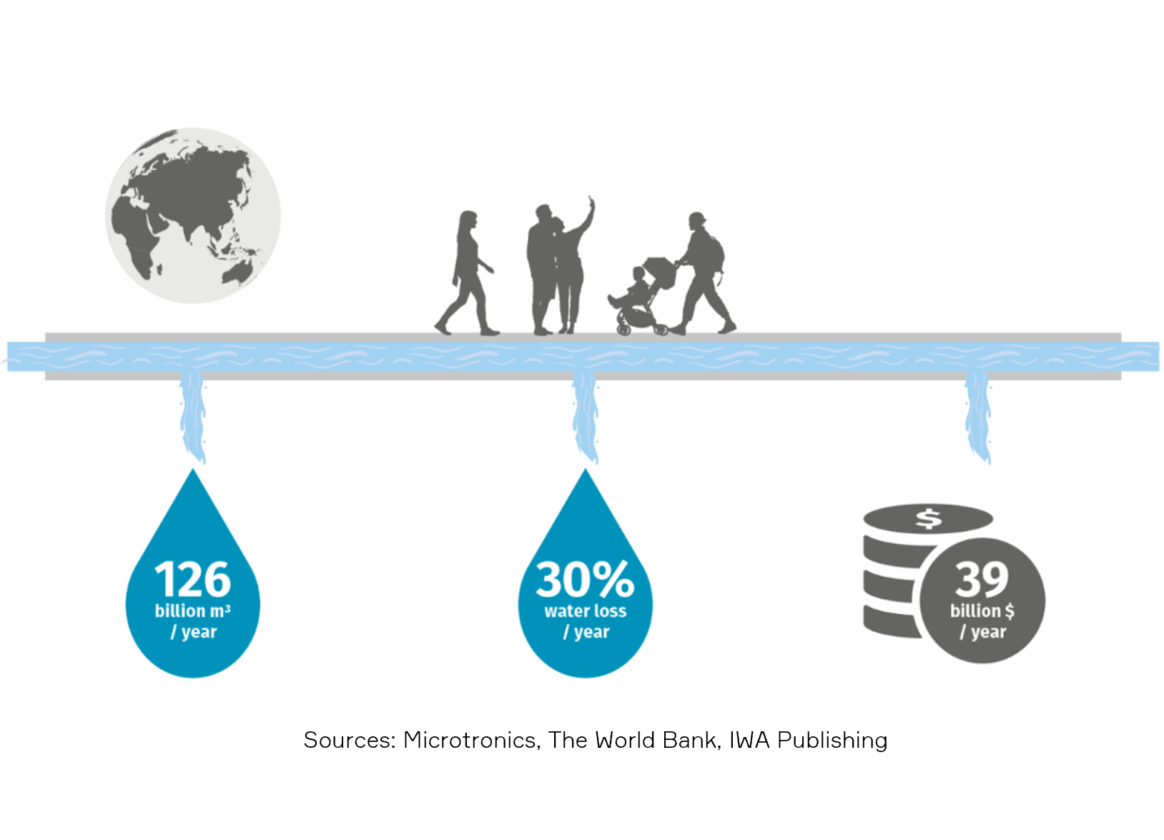
The problem lies elsewhere:
- in the geographical distribution
- in the availability of time
- in quality
- and above all: in the infrastructure
Worldwide, 30-35% of treated drinking water never reaches the end user. It seeps away into dilapidated pipe networks. At the same time, only 4-5% of wastewater is reused, even though it is one of the largest unused sources of water.
In many regions, water stress is not a law of nature. It is the result of infrastructure failure and a lack of efficiency. This is politically inconvenient, but accurate as an investment thesis.
From diagnosis to investment logic
If structural infrastructure deficits are the actual cause, there are specific capital market implications. In addition to the protection of natural resources, substantial investments in technology, modernization and efficiency are required.
The growth areas are clear:
- Network modernization and leakage detection
- Wastewater treatment and reuse
- Membrane and filtration technologies
- Intelligent irrigation systems
- Monitoring and data solutions
The water industry is highly fragmented. There are no global monopolies and no “winner-takes-it-all” dynamics. This limits speculative exaggerations and creates stable long-term growth paths for companies.
A structural issue
Water is not a fad. The need for investment is structural, not cyclical.
For 19 years, the Tareno Global Water Solutions Fund has been investing along the entire water value chain in listed companies that not only develop efficiency, treatment and infrastructure, but also scale them profitably. With the unique impact share class, investors have the opportunity to finance drinking water projects in developing regions and thus make a direct and measurable contribution to SDG 6 “Clean Water and Sanitation”.
Possibly add SDG 6 graphics, only if it looks good!
Conclusion: A structural reality
“Water bankruptcy” may sound dramatic. But the term is more honest than the usual euphemisms. Many water systems are overused, not because water is physically lacking, but because allocation, infrastructure and efficiency are failing.
Water scarcity is not a law of nature. It is the result of structural misallocation and can therefore be invested in.

Would you like to find out more?
Do you have any questions about the report or would you like to find out more about the Tareno Global Water Solutions Fund? Then please do not hesitate to contact us.
Publications
Tareno Water Fund
Responsible
Stefan Schütz
Fund Manager
s.schuetz@tareno.ch
Disclaimer
This information is not intended as an offer or solicitation with respect to the purchase or sale of shares of the Variopartner SICAV-Tareno Global Water Solutions Fund. Please be aware that investment funds involve investment risks, including the possible loss of the principal amount invested. For a detailed description of the risks in relation to each share in the investment fund, please see the prospectus. Investments of the Luxemburg Variopartner SICAV-Tareno Global Water Solutions Fund should be made due to the fund’s latest prospectus, the statutes, the latest annual report and, if applicable, the half-yearly report. These documents are available free of charge from the domicile of the fund at 33, rue Gasperich, L-5826 Hesperange, Luxembourg, or from Vontobel Fonds Services AG, Dianastrasse 9, CH-8022 Zurich, Switzerland and Bank Vontobel AG, Zurich, Switzerland.
Pictures: Jürg Kaufmann, Lucia Hunziker, Marijke Vosmeer, ChatGPT