Artificial Intelligence: Why the AI Boom Is Transforming the Water Sector, Too
AI Needs Water
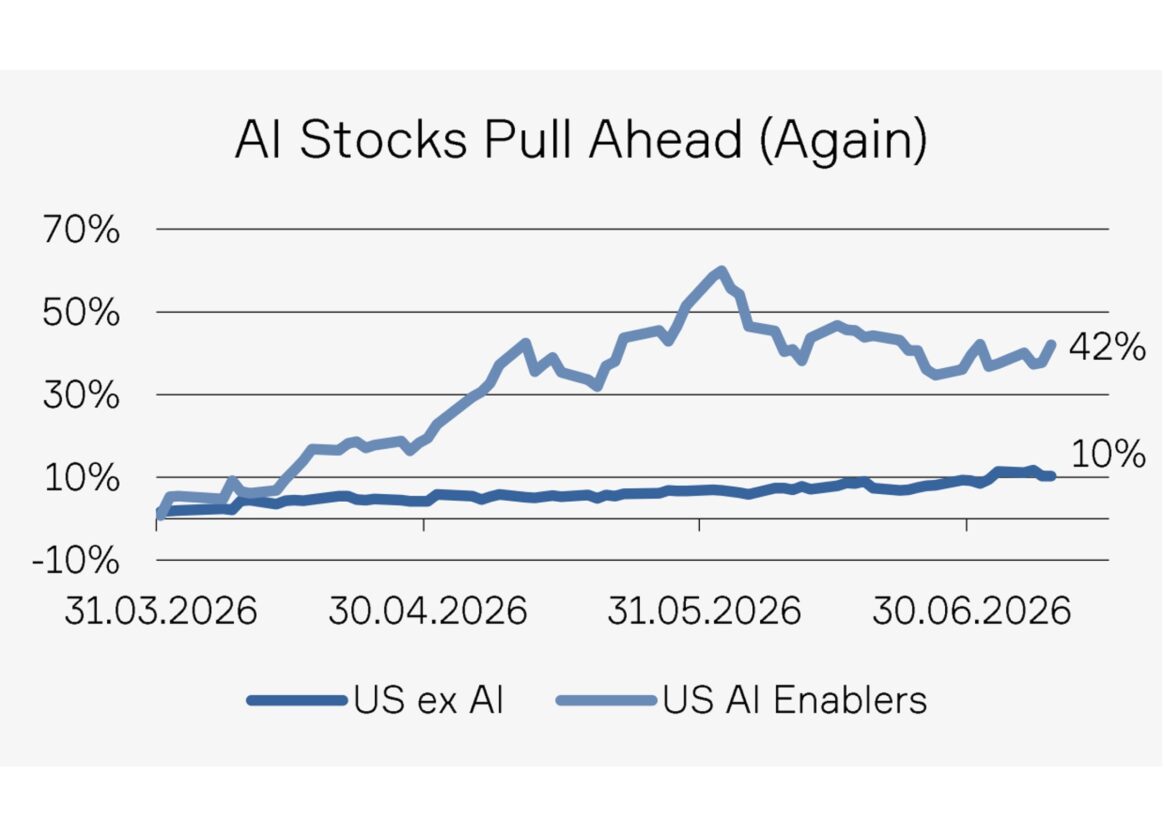
Artificial intelligence is considered one of the most important drivers of growth in the coming years. The focus is usually on large technology companies and the massive expansion of data centers. Accordingly, the AI sector was responsible for a large portion of global stock market gains in the second quarter of 2026. But behind this trend lies not only a new technology, but also an extensive physical infrastructure and a resource that is often underestimated: water.
Water is needed for everything from the manufacture of high-performance chips to the construction and operation of data centers. The AI boom therefore has an impact far beyond the technology sector and is creating new demands on water treatment, cooling, and infrastructure.
Source of chart: Tareno View, July 2026
No Chips, No Artificial Intelligence
The development of powerful AI models would not be possible without specialized high-performance chips. They handle the complex computational operations on which modern AI applications are based.
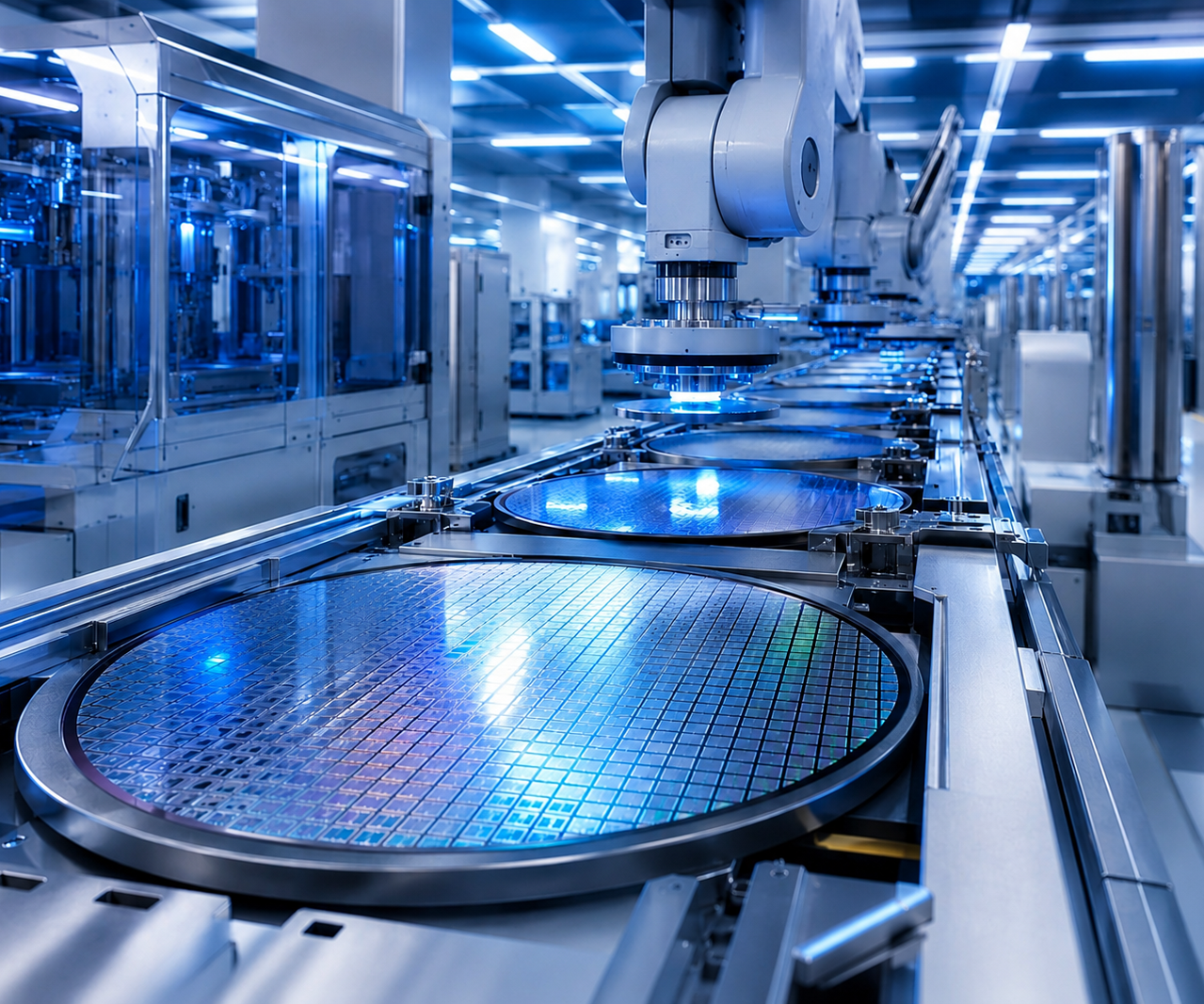
Water plays a central role even in their manufacturing, as their production is very water-intensive. TSMC, one of the world’s leading chip manufacturers, consumed approximately 151 million cubic meters of water in 2025. That amounts to more than 400 million liters per day. As chips become more complex, demand increases because more production and cleaning steps are required.
A large portion of this water is required as ultrapure water, which is almost completely free of minerals, particles, and other impurities. This is where specialized water technology companies come into play. Kurita Water Industries, for example, develops and operates systems to supply the semiconductor industry with ultrapure water. The Japanese company Organo Corporation also provides ultrapure water systems and other water treatment solutions for the semiconductor and electronics industries.
But simply manufacturing the chips isn’t enough. To harness their enormous computing power, additional physical infrastructure is needed: data centers.
Why Data Centers Need Water
Data centers process large amounts of data and train and run AI models. As artificial intelligence becomes more widespread, the demand for high-performance data center infrastructure is therefore increasing. The high computing power of the chips used generates significant heat, which must be reliably dissipated. Water-based systems and liquid cooling are playing an increasingly important role in this regard.
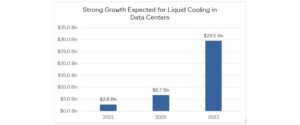
Source: Grand View Research, Kepler Cheuvreux; Chart by Tareno AG
This is where various companies in the water sector come into play. Xylem offers solutions throughout the cooling water cycle—from pumps and filtration to water treatment and digital monitoring. Gorman-Rupp supplies pump systems used, among other things, for liquid cooling directly at server racks, in HVAC cooling systems, and in fire protection. Watts Water Technologies, in turn, provides valves, filtration solutions, and other components that enable water to be controlled, treated, and efficiently recirculated in closed cooling systems.
As water-based cooling solutions become increasingly important, there is growing pressure to use this resource as efficiently as possible. This challenge is further compounded by the fact that many data centers are being built in regions with limited water availability. When selecting a location, other factors—such as power supply, grid connectivity, or land availability—often take precedence. This makes solutions that efficiently treat and reuse water and keep it in closed loops for as long as possible all the more important.
What the AI Boom Means for Investors in the Water Sector
For investors, this development demonstrates once again that the economic impact of a long-term growth trend is not limited to its most obvious beneficiaries. The expansion of artificial intelligence also creates demand among companies whose technologies are needed to build and operate the necessary infrastructure.
In the water sector, this additional demand coincides with an already high structural need for investment. In many places, existing networks must be modernized, water losses reduced, and more water treated and reused.
Artificial intelligence is thus not the fundamental growth thesis of the water sector, but rather an additional structural driver that further reinforces the existing investment need.
How Tareno Analyzes Opportunities in the Water Sector
For over 20 years, Tareno has been closely monitoring companies in the global water sector. The team at the Tareno Global Water Solutions Fund analyzes companies across the entire water value chain and focuses on long-term developments in the areas of water infrastructure, water treatment, and efficient water use. New technological developments and their impact on water demand are also factored into the analysis of the long-term opportunities and risks for individual companies.

Note:
This publication is a promotional communication. It was prepared for marketing and informational purposes and does not constitute an offer or a solicitation to subscribe to, buy, or sell shares of this investment fund. It does not constitute investment advice. Only the current fund documents (in particular the prospectus and KID) are authoritative. Past performance is not a reliable indicator of future results.