Markets under the spell of the Iran conflict
Energy prices drive inflation fears
Rising energy prices act like a tax on the global economy. They drive up inflation, weigh on consumption and increase companies’ production costs. Accordingly, the stock markets have been under pressure since the start of the war. European markets and energy-intensive sectors were particularly hard hit, while energy stocks were among the few winners.
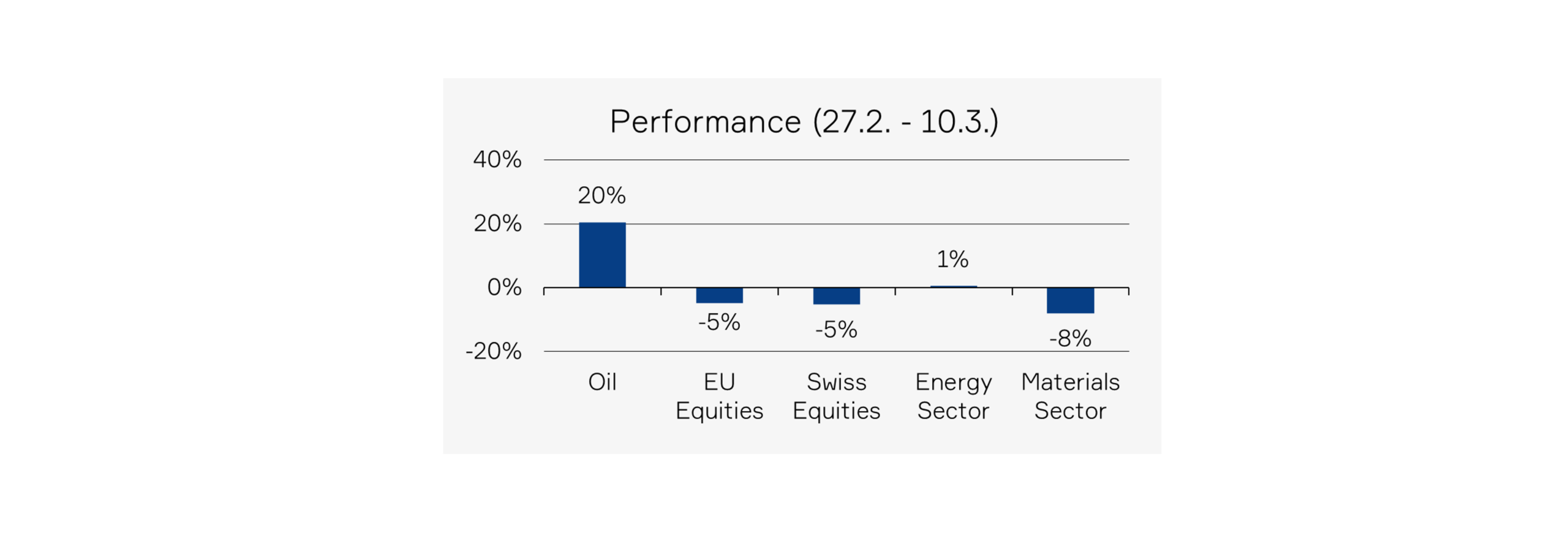
Images / graphics: The graphics were produced by Tareno AG from public market data.
Who has more staying power?
The further course of the markets depends crucially on the duration of the conflict. At the beginning, US President Donald Trump was banking on a quick end, either through a political deal or a regime change. However, despite military setbacks, the Iranian regime has so far proved resilient.
By hindering energy exports from the Gulf region and attacking critical infrastructure in neighboring countries, Iran is trying to increase the economic costs for the US and its allies. The conflict is thus increasingly developing into a strategic battle of attrition. The decisive factor for the outcome is not only military strength, but also the ability to withstand economic burdens, supply shocks and infrastructural damage over a longer period of time.
The economic risks
Every day that energy exports from the Gulf region remain restricted, the risk of a braking effect on the global economy increases. According to estimates by the International Monetary Fund, an oil price of USD 100 per barrel:
- reduce global economic output by around 0.4 %.
- increase inflation by around 1.2 %.
A prolonged supply disruption could drive up the oil price further and put a noticeable brake on the economy.
Base scenario: easing
However, a prolonged conflict is hardly in the interests of the US government. The American population is skeptical of a war in Iran, and rising energy prices are politically highly unpopular.
We therefore continue to believe that an easing of tensions within the coming weeks is the most likely scenario. In this case, the conflict should not cause any lasting economic damage and lead to a calming of the financial markets.
Despite our basic scenario, the risks should not be ignored. After three years of strong price gains, valuations on many equity markets are challenging and geopolitical shocks could lead to significant setbacks in the short term.
Our recommendation therefore remains: remain invested in view of the probable easing and wait to make any major purchases, taking into account the downside risks.
Countering inflation risks strategically
The current conflict is yet another reminder that inflation shocks represent a key risk for portfolios. In such phases, bonds offer only limited protection, as they also suffer price losses in anticipation of higher interest rates.
In our strategic allocation, we therefore deliberately include asset classes that have proven themselves in inflationary phases:
- Commodity shares
- Infrastructure facilities
- Gold
- and a high proportion of Swiss francs
These building blocks increase the robustness of a portfolio in an environment of increasing geopolitical tensions and inflation risks.

Do you have any questions on this topic?
Our portfolio management team will be happy to provide you with explanations and clarifications.
Find out more about us
Asset management
Publications