The tariff dispute enters the next round
Four months ago, US President Donald Trump surprised everyone with the introduction of so-called “reciprocal” tariffs, which immediately led to massive reactions on the financial markets. Fears of an escalating trade conflict and an economic downturn were clearly palpable. After a week, there was a backlash: on April 9, tariffs were reduced to 10% for many countries, with China following suit a month later. The markets breathed a sigh of relief, and initial bilateral agreements with countries such as the United Kingdom (10%), South Korea, Japan, and the EU (all 15%) gave rise to cautious optimism about a favorable outcome to the trade war and a conclusion to the vexed issue of tariffs.
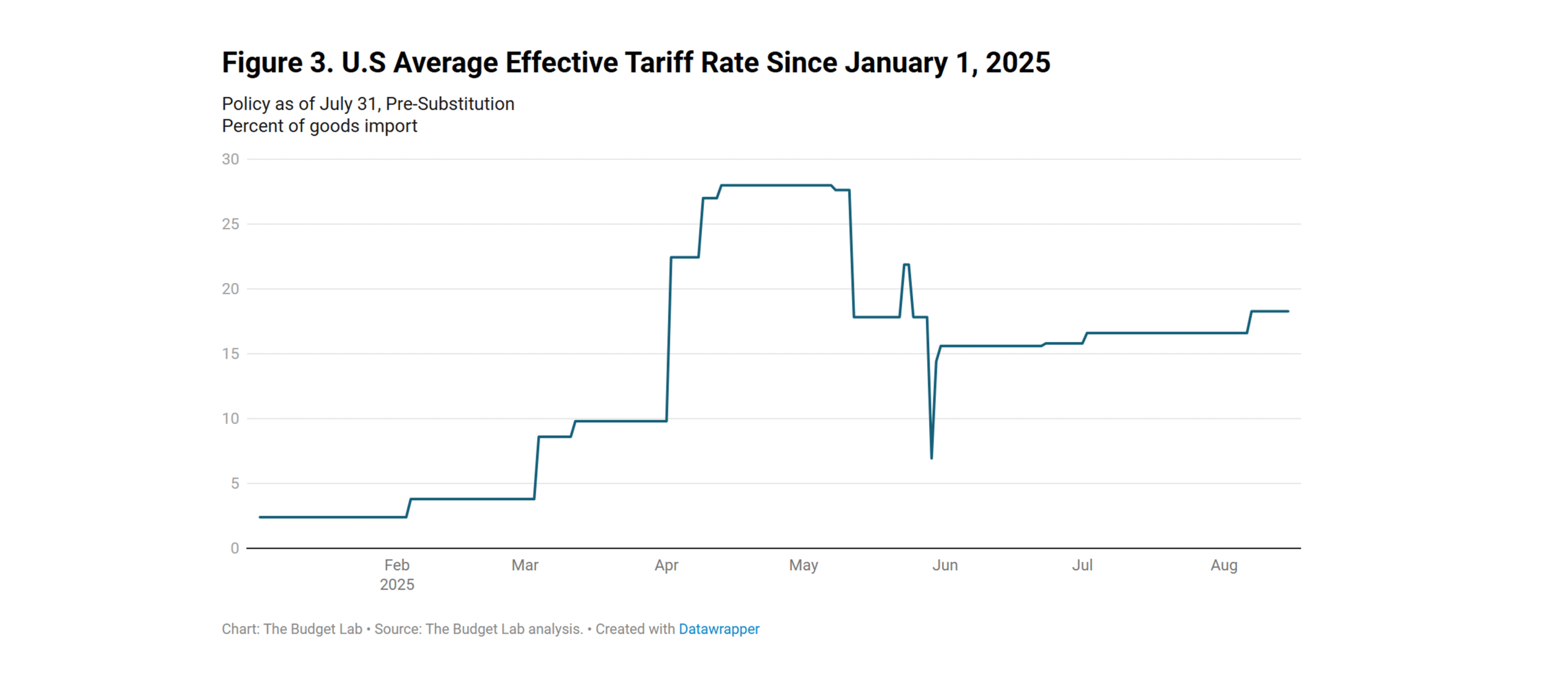
However, on July 31, the US government once again took a confrontational course. Tariffs were significantly increased for some countries, including 25% for India, 35% for Canada, and 39% for Switzerland. According to Yale University’s Budget Lab, this brings the weighted average US tariff rate to around 18%.
Financial markets under pressure
The new tariff threats contributed to global stock market losses of 2–3% on August 1. The Swiss market is also likely to open with significant losses on Monday after the national holiday. In addition to the new trade barriers, disappointing US labor market data also contributed to the uncertainty. In addition, the tariff dispute is limiting the Federal Reserve’s monetary policy flexibility.
In addition, the tariff dispute is limiting the Federal Reserve’s monetary policy flexibility. Fed Chairman Jerome Powell recently resisted pressure from the White House and left key interest rates unchanged.
What happens next?
The new tariff announcements should primarily be seen as a negotiating tactic. Experience in recent months shows that after a short-term escalation, the effective tariffs were usually introduced within a range of 10–20%. We expect Switzerland to also reach an agreement and ultimately end up in this range – possibly before the 39% tariffs come into force.
We continue to assume that US tariffs in this range will dampen global growth, but will not bring it to a standstill. The vast majority of affected companies will be able to pass on the additional costs to US consumers in the medium term.
Don’t overlook positive momentum
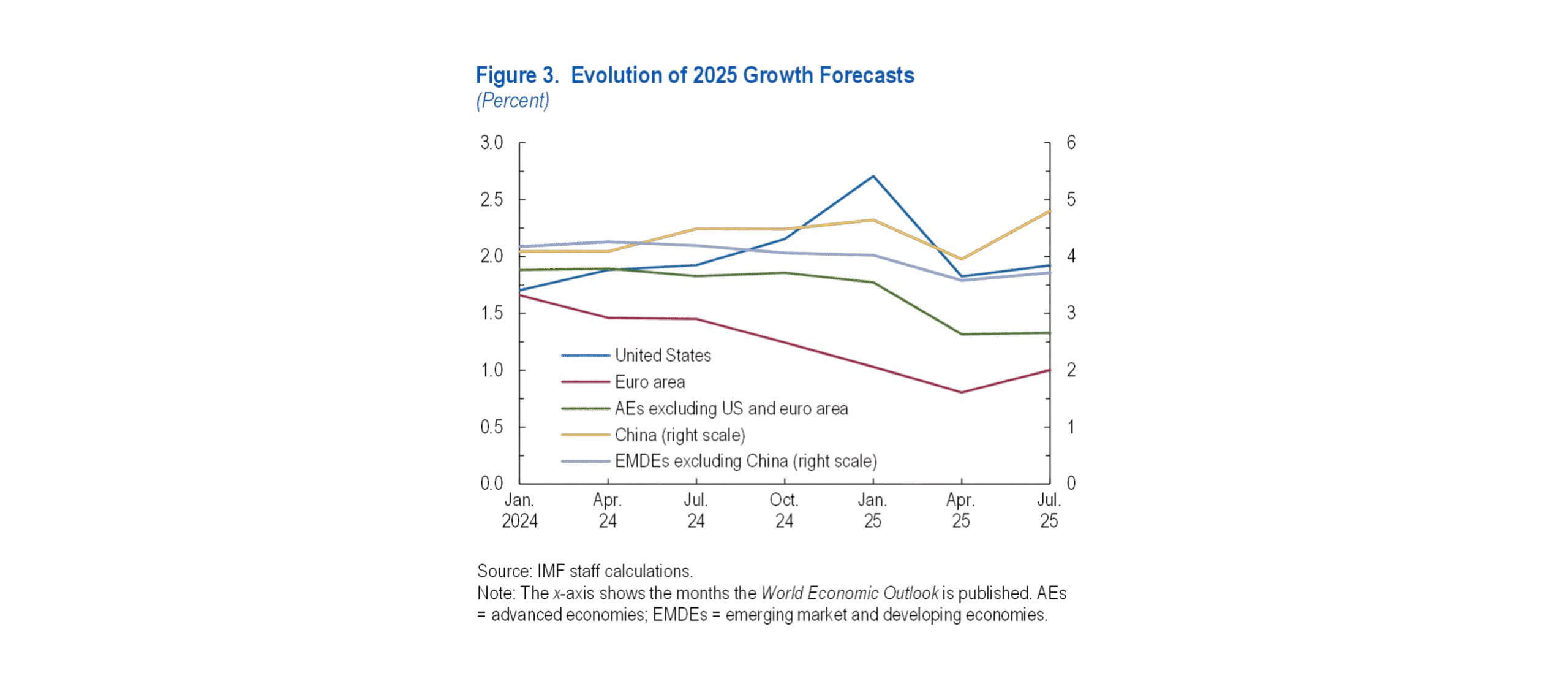
Despite the uncertainty surrounding the tariff conflict, there are also rays of hope: the International Monetary Fund recently raised its global growth forecasts, supported by lower interest rates, expansionary fiscal policy, and favorable financing conditions. The additional growth momentum provided by investments in infrastructure and advances in artificial intelligence should not be overlooked.
Stay invested
Despite the current setbacks, our medium-term outlook for equities remains constructive. We also see no need to adjust our portfolios. Our portfolio companies are well protected against US trade barriers, as most of them produce locally or have significant pricing power. Service companies are only indirectly affected anyway.
Wait before making new purchases
In the short term, however, increased caution is warranted. Following the sharp improvement in market sentiment since April and given the fragile geopolitical situation, profit-taking could set in. We therefore recommend waiting before making any new positions at this time.
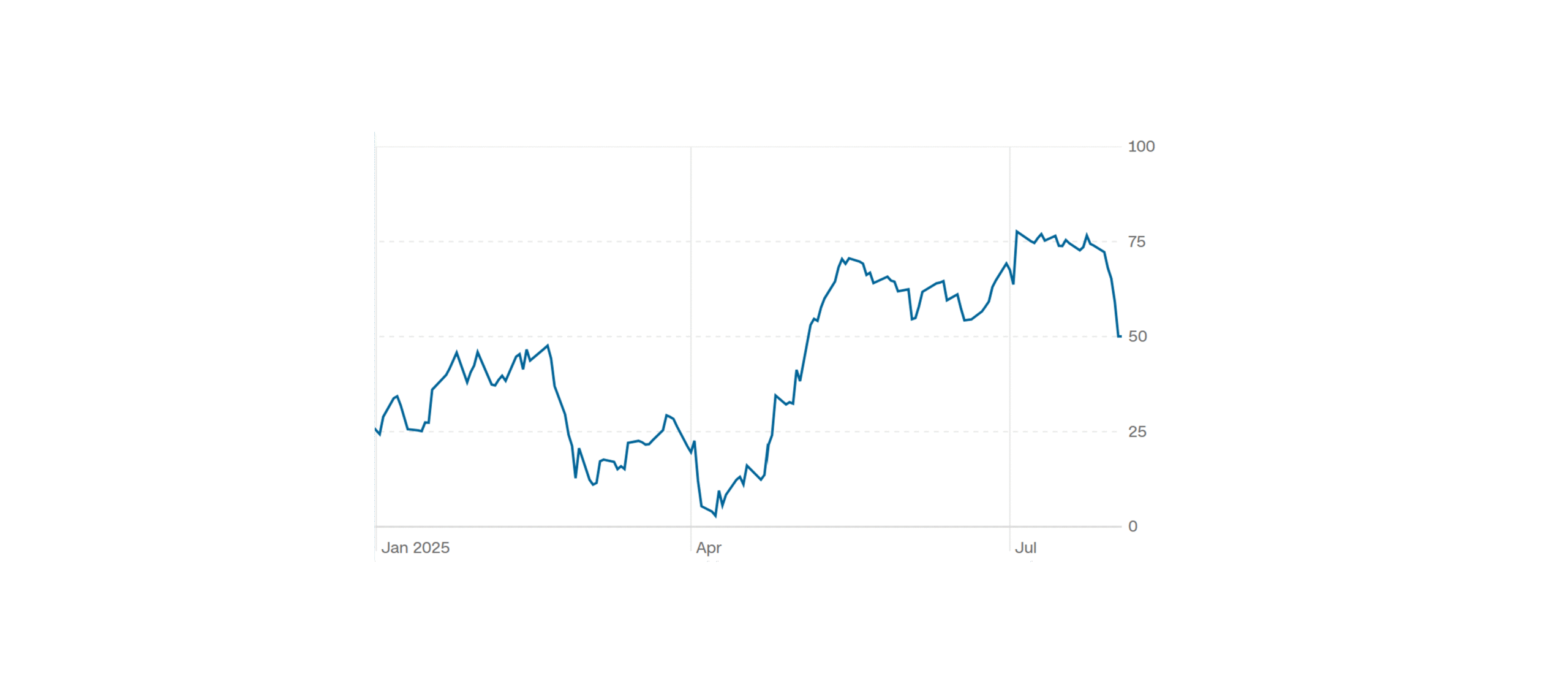
Fear and Greed Index (in April “extreme fear,” in July “extreme greed,” now neutral)
Publisher: Tareno AG, Gartenstrasse 56, 4052 Basel, Tel. +41 61 282 28 00, info@tareno.ch, www.tareno.ch. We welcome feedback on our publication. The content provided here is for informational purposes only. The publication does not contain any legal or investment advice or investment recommendations and does not constitute an offer or solicitation to make an investment.
Images/graphics: The graphics were created by Tareno AG from public market data.

Do you have any questions about this topic?
Our portfolio management team is happy to provide you with explanations and clarifications.
Learn more about us
wealth management
publications