Prof. Brunetti’s assessments with a focus on US economic policy and governmentdebt
Global economic situation
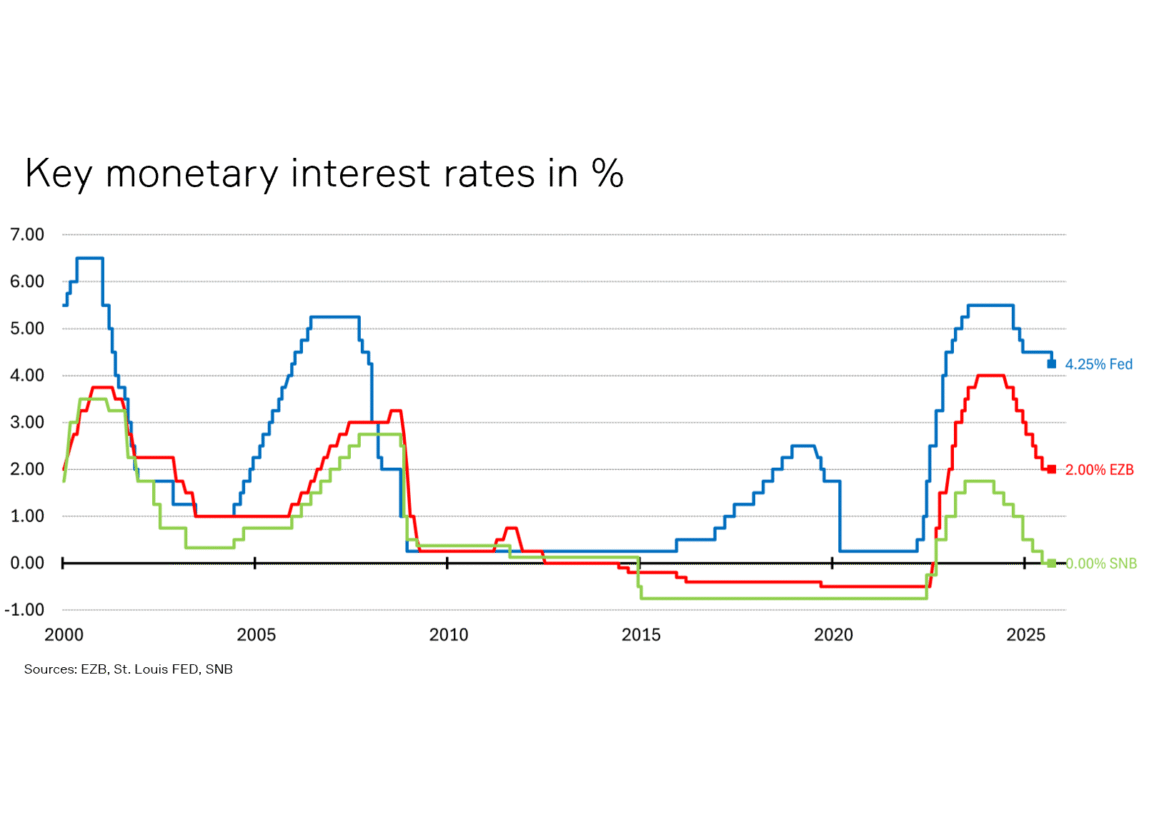
The global economy will continue its moderate growth of recent years in 2025. Despite the subdued pace, the unemployment rate will remain low as the labor market reacts less strongly to economic weaknesses due to demographic trends.
The inflation trend in Switzerland is unspectacular: core inflation is in the ideal range. Price trends in the USA, on the other hand, are a cause for concern. Inflation there is well above the central bank’s target and has even accelerated recently. Against this backdrop, Prof. Brunetti believes that the Fed’s latest interest rate cut is not justified.
US economic policy
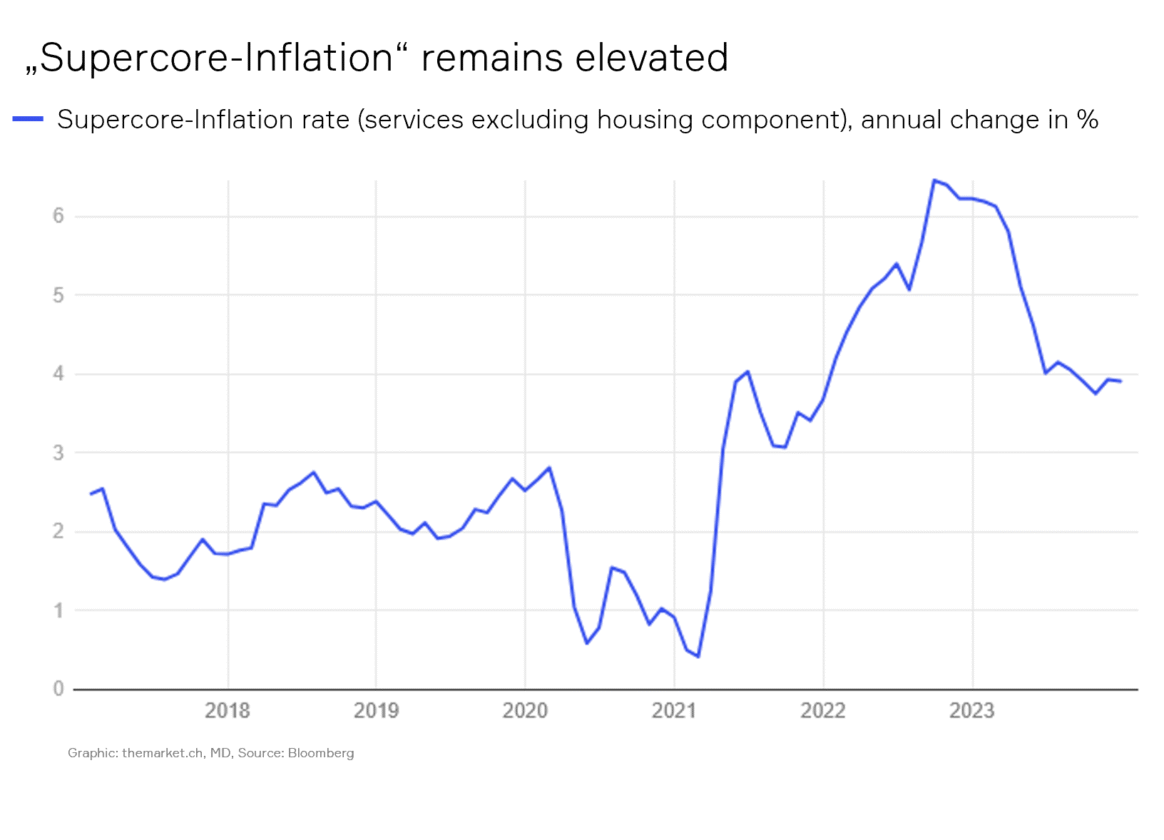
The current US administration is creating an unusually high level of economic policy uncertainty. This is unsettling companies, dampening their willingness to invest and weakening the growth-promoting impetus of the pro-business measures. The true costs of this policy are only likely to be felt in the long term, e.g. through rising inflation expectations. This is because the inflationary policy mix keeps inflationary pressure high. This is also reflected in the so-called core inflation rate, which is stubbornly holding at 4% and is therefore well above the pre-crisis level.
National debt
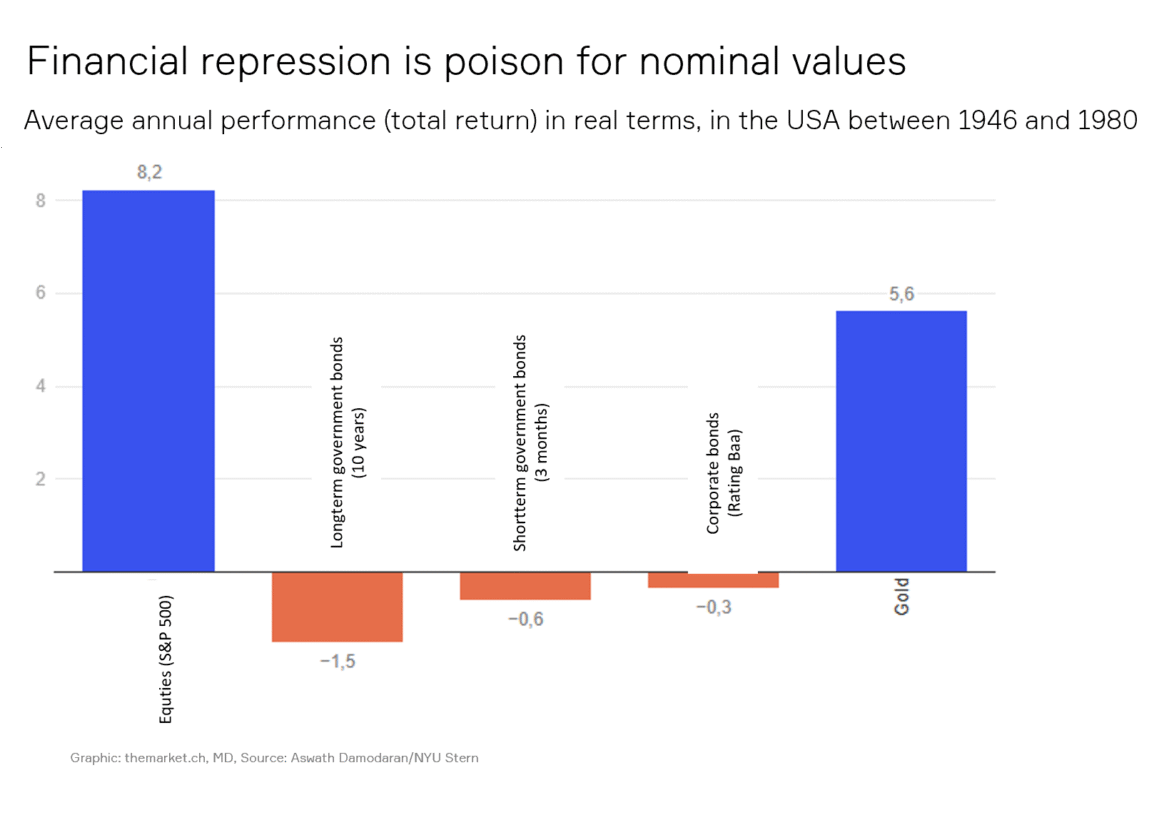
Public debt also remains a risk factor. Since the turn of the millennium, public debt has more than doubled in relation to economic output in many countries. A trend reversal is not in sight. Prof. Brunetti sees financial repression as the most likely solution. Among other things, the state is forcing a redistribution from savers to its own benefit through capital controls. Tangible assets (shares, gold, Bitcoin) are much better protected against this development than nominal assets (liquidity, bonds).
Outlook
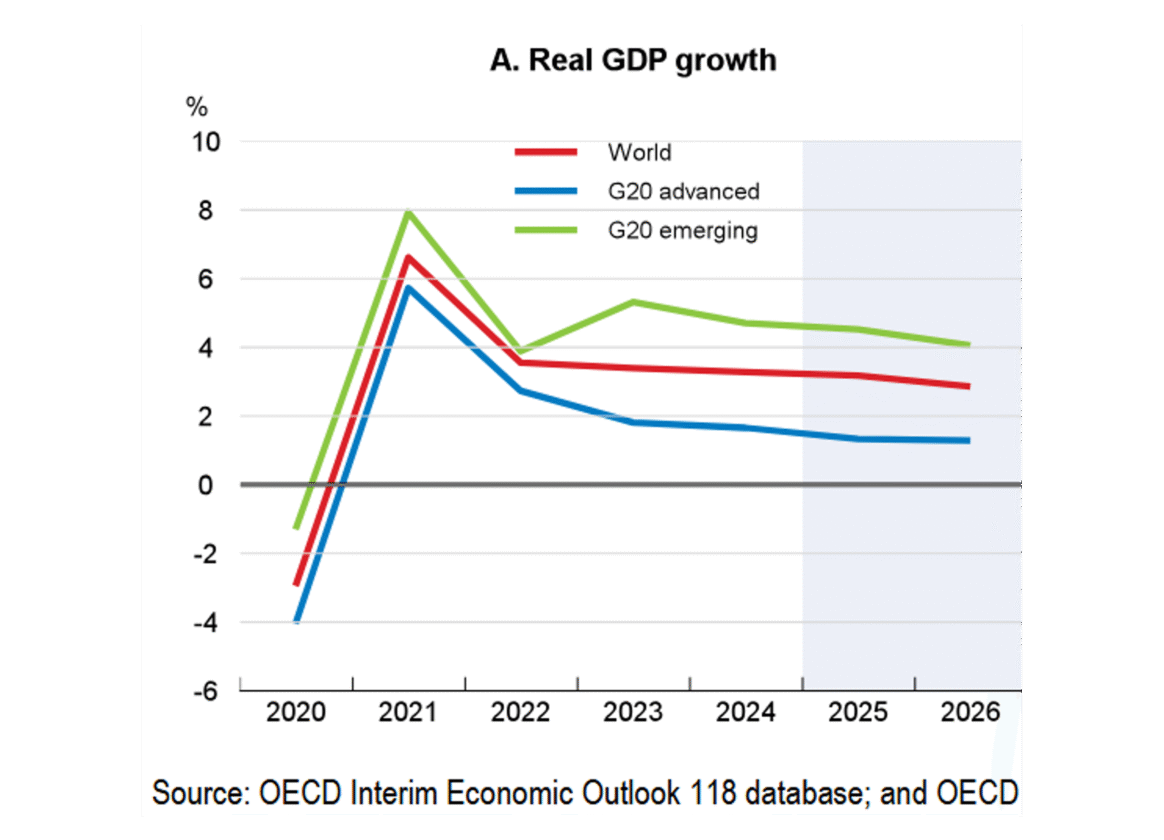
For the coming years, Prof. Brunetti expects the moderate global growth of around 3% to continue and inflationary pressure in the USA to persist. Opportunities will arise from technological progress, particularly in the field of artificial intelligence. This could significantly increase productivity. In contrast to previous innovations, this time it is likely to be adapted more quickly across the board, which means that the positive effects could be reflected earlier in the macroeconomic data.

Conclusion
Our Chief Investment Officer, Simon Lutz, sees Prof. Brunetti’s assessment as confirmation of the forward-looking orientation of our investment policy.
- Government bonds are avoided.
- The US dollar risk is deliberately kept low.
- Equities and private market investments form the basis for long-term capital growth.
- Gold and Bitcoin serve as a store of value and diversification building blocks.
Find out more about our expertise
Investment advice
Portfolio Check
Responsible
Simon Lutz
Chief Investment Officer
s.lutz@tareno.ch
Disclaimer
The statements and information in this publication have been compiled by Tareno AG to the best of its knowledge, in part from external (publicly accessible) sources which Tareno AG considers to be reliable, for information purposes only. This publication is not the result of a financial analysis. Tareno AG and its employees are not liable for incorrect or incomplete information or for losses or lost profits resulting from the use of information and the consideration of opinions expressed. The statements and information do not constitute a solicitation or invitation, offer or recommendation to buy or sell any investment instruments or to engage in any other transactions.
Nor do they constitute a specific investment proposal or other advice on legal, tax or other issues. A positive return on an investment in the past is no guarantee of a positive return in the future. The statements, information and opinions expressed herein are current only as of the date of this document and are subject to change at any time.
Duplication or reproduction of this publication, even in part, is not permitted without the written consent of Tareno AG. The “Guidelines to ensure the independence of financial analysis” of the Swiss Bankers Association do not apply. [Images: IStock, Shutterstock, Pixabay, Unsplash. Originals: Marijke Vosmeer, Charts: Tareno AG]